 |
 |
|
| |||||||||||||||||||||||||||||||||||||||||||||
|
March 02, 2009
Sturdivant Passes
Permalink Tom Sturdivant died on Saturday: Before an arm injury in 1958 hampered him the rest of his career, the righthander was a rising star for Casey Stengel's teams. After pitching in 34 games almost exclusively in relief as a rookie in 1955, Sturdivant was moved into the starting rotation in 1956 and went 16-8 with a 3.30 ERA. With an above-average fastball and a devastating curve that earned him the nickname "Snake", Sturdivant led the AL with a 2.12 strikeouts-to-walks ratio (11-0/52). The Yankees of that era tended to use pitchers with high walk totals. New York was very good at turning the double play, so Casey tolerated the walks if his staff could induce ground balls. In 1957, Sturdivant's walks went up and his strikeouts went down, and he turned in even a better ERA. My thoughts go out to his family and friends. Posted by StatsGuru at 10:26 AM
| Comments (0)
| TrackBack (0)
February 13, 2009
Uhlaender Passes
Permalink Former player Ted Uhlaender passed away. My thought go out to his family and friends. Posted by StatsGuru at 10:58 AM
| Comments (0)
| TrackBack (0)
February 03, 2009
A Piece of Pie
Permalink It's the 50th anniversary of the day the music died. Posted by StatsGuru at 10:54 AM
| Comments (1)
| TrackBack (0)
January 23, 2009
More on Werber
Permalink Eric Seidman at FanGraphs spoke extensively with the late Bill Weber and remembers him in this post. Posted by StatsGuru at 12:53 PM
| Comments (0)
| TrackBack (0)
January 22, 2009
Werber Passes
Permalink The title of oldest living player gets handed down: Bill Werber, who was the oldest living former major leaguer and a former teammate of Babe Ruth, has died at age 100. Good for Bill. One century is very impressive, and to have spent part of it playing with the greats of the game makes it that much more special. My thoughts go out to his family and friends. Update: Tony Malinosky appears to be the oldest living player now. Posted by StatsGuru at 08:52 PM
| Comments (5)
| TrackBack (0)
January 15, 2009
Losing a Blogger
Permalink My sympathies go out to the crew of Bronx Banter who lost Todd Drew at way too young an age: It is with a heavy heart that I pass along the news that our colleague and friend Todd Drew passed away last night. According to his wife, "Todd lost the last game of the season in the bottom of the 9th inning just after midnight. His dear friend Michael and I were with him and he went very peacefully. While we were sharing the ipod listening to Regina Carter (jazz violinist), he opened his eyes for just a moment." My thoughts go out to his family and friends. Posted by StatsGuru at 01:30 PM
| Comments (0)
| TrackBack (0)
Money Can't Buy Happiness
Permalink Former pitcher Frank Williams died. I had him on my Strat-o-Matic teams at some point. He had a great three-year stretch, throwing 105 2/3 innings, all in relief in 1987 (the Reds were wearing out relievers in those days). His end at age 50 was not a good one: The Times Colonist reported that Mr. Williams had lost all the money he made playing baseball (his salary peaked at $442,500) and ended up an alcoholic living on the street and in shelters. He died after having a heart attack. My thoughts go out to his family and friends. Posted by StatsGuru at 09:06 AM
| Comments (1)
| TrackBack (0)
January 14, 2009
KAHNNNNNNNNNNNNNNNN!
Permalink Goodbye, Riccardo. Posted by StatsGuru at 06:04 PM
| Comments (1)
| TrackBack (0)
January 13, 2009
Preston Gomez Passes
Permalink Long time baseball man Preston Gomez has died: Gomez, who worked in the sport as a scout, coach, manager and executive, was part of the Angels organization for the last 28 years. He most recently served as a special assistant to the general manager. Gomez was born in Cuba, so I have a question. Was he the first Hispanic manager? According to his obituary, he was inducted into the Hispanic Baseball Heritage Museum's Hall of Fame. Does Preston not get the recognition because he was light skinned enough to play in the majors before Jackie Robinson broke the color barrier? My thoughts go out to his family and friends. Posted by StatsGuru at 11:34 PM
| Comments (4)
| TrackBack (0)
January 09, 2009
Pitcher Passes
Permalink Dave Roberts, the pitcher from the 1970s, died of lung cancer. Roberts didn't strike out many batters in his career, but he was stingy with walks and home runs. Part of that might be attributable to pitching many years in San Diego and Houston, but in 1976 he allowed just 16 home runs in 252 innings for the Tigers. My thoughts go out to his family and friends. Posted by StatsGuru at 12:07 PM
| Comments (1)
| TrackBack (0)
January 05, 2009
Pohlad Passes
Permalink Carl Pohlad died today, Monday: When Pohlad paid Calvin Griffith $38 million for the Twins in 1984, he was widely credited for saving baseball in Minnesota. With the purchase, he inherited a promising group of young players including Gary Gaetti, Kent Hrbek and future Hall of Famer Kirby Puckett. Pohlad never went out of his way to help the team with his own money, however. Injections of cash could have helped keep some stars in town. Having paid $38 million for the team, Forbes valued the Twins at $328 million last year. Pohlad could have used some of that equity to keep Santana around, for example, rather than just the yearly revenue the Twins produced. Still, Carl does get credit for hiring good baseball people who brought two World Championships to the Twin Cities and have kept the team highly competitive in this decade. My thoughts go out to his family and friends. Posted by StatsGuru at 07:04 PM
| Comments (4)
| TrackBack (0)
December 21, 2008
Disappearing Group
Permalink Negro League star Carlos Manuel Santiago passed away today (Sunday). Santiago played second base and shortstop for the New York Cubans in 1945-46. He was invited to spring training by the Cleveland Indians in 1951 but was soon drafted into the U.S. Army and sent to Korea. He was honorably discharged as a sergeant about two years later. There can't be too many Negro League players left. The youngest would be in their 70s. Certainly the number left from before Jackie Robinson broke the color barrier has to be pretty small. My thoughts go out to his friends and family. Posted by StatsGuru at 06:46 PM
| Comments (1)
| TrackBack (0)
December 20, 2008
Dock Dies
Permalink Dock Ellis's liver gave out yesterday. Dave Studeman remembers the pitcher. A note on Dave's post, Doc Medich was a medical student at the time, not a real-live doctor. Ellis's ability to strike out batters didn't last long. In 1969 he K'd 173 in 218 2/3 innings, 7.1 per nine. In 1970, that dropped to 5.7 per nine, and for his career he came in at 4.8 K per nine. I wonder if the drug abuse killed his ability to get the strike out. My thoughts go out to his family and friends. Posted by StatsGuru at 09:04 AM
| Comments (0)
| TrackBack (0)
December 19, 2008
Beam Her Up
Permalink Majel Barrett died yesterday. I never cared for her mother Troi character, but she did a great computer voice. Posted by StatsGuru at 08:28 AM
| Comments (0)
| TrackBack (0)
December 18, 2008
Nick Willhite Passes
Permalink Nick Willhite died Sunday. His life after baseball was a rough one that at least ended well: Willhite bounced around from one job to another, working as a pitching coach at Brigham Young University and in the Milwaukee Brewers and New York Yankees organizations. My thoughts go out to his family and friends. Posted by StatsGuru at 09:13 AM
| Comments (1)
| TrackBack (0)
Reliever Passes
Permalink Former relief pitcher Dave Smith died of a heart attack: Dave Smith, a former All-Star closer who holds the Houston Astros record for games pitched, died Wednesday. He was 53. Smith was consistently good throughout his career. He was particularly adept at keeping the ball in the park, averaging 5.9 HR per 200 innings. My thought go out to his family and friends. At age 53 he leaves plenty of the latter. Posted by StatsGuru at 08:07 AM
| Comments (0)
| TrackBack (0)
December 11, 2008
The Law of the Flies
Permalink The law student who turned the infield fly rule into a study of common law passed away: William S. Stevens, whose slyly humorous law-review note on the relationship between baseball's infield fly rule and Anglo-American common law became one of the most celebrated and imitated analyses in American legal history, died Monday in Anchorage, where he was working. He was 60 and lived in Narberth, Pa. Another reason baseball is the coolest sport in the world. My thoughts go out to his family and friends. Posted by StatsGuru at 11:20 PM
| Comments (3)
| TrackBack (0)
December 02, 2008
Blanco Tragedy
Permalink Henry Blanco's brother was killed in an apparent kidnapping: Police believe that 39-year-old Carlos Simon Blanco was murdered by kidnappers after they abducted him Sunday in Guarenas, a Caracas suburb. Police found the victim's bullet-riddled body on Monday. My condolences go out to the Blanco family. Posted by StatsGuru at 10:19 PM
| Comments (1)
| TrackBack (0)
Rogers Passes
Permalink Ted Rogers, the owner of the Toronto Blue Jays, passed away Monday. Rogers Communications owns the Blue Jays and their home at the Rogers Centre, several television stations and an array of other media properties including Maclean's and Chatelaine magazines. Rogers owned the club from 2000 on, but were unable to return the team to the playoffs. My thoughts go out to his family and friends. Posted by StatsGuru at 01:36 PM
| Comments (0)
| TrackBack (0)
November 11, 2008
Death of Score
Permalink Herb Score passed away this morning (Tuesday). He was a young phenom on the mound when a line drive put an end to his greatness: McDougald, the second batter of the game, reached for a low pitch and lined it back at Score. The ball crashed into his face, breaking his nose, cutting his right eyelid and causing swelling and hemmorhaging of the cheekbone and eyebrow. In his first two years in the majors, Score struck out 508 batters while allowing just 320 hits. He pitched into the 1962 season but without the great results. At the end of 1963, Score tried announcing and stayed on for 34 seasons with the Indians. I have no doubt his fans in Cleveland will miss him tremendously. My thoughts go out to his family and friends. Posted by StatsGuru at 11:23 AM
| Comments (4)
| TrackBack (0)
November 10, 2008
Preacher Passes
Permalink Preacher Roe passed away Sunday: Elwin Charles Roe better known as major league baseball pitcher "Preacher" Roe died Sunday night after a battle with colon cancer. He was a late bloomer due to World War II, but put together five excellent season for the Dodgers in the late 1940s and early 1950s. Roe appears to have given himself the nickname at a young age: Roe got his nickname at about three years of age when his family lived in Wild Cherry. Although Roe has given various versions of how the nickname came about, his response in an interview in the West Plains Gazette is likely the closest to the truth: "I had an uncle that came back from the first World War who hadn't ever seen me. He said, 'What's your name, young man?' And for some reason I said, 'Preacher.'...My mother said maybe it was because I liked the preacher we had at our church so well." My thoughts go out to his family and friends. Posted by StatsGuru at 01:07 PM
| Comments (1)
| TrackBack (0)
October 27, 2008
Death in the Blog Family
Permalink Dean Barnett, who used to write about the Red Sox at Soxblog before moving on to bigger and better things passed away at the age of 41. My thoughts go out to his family and friends. Posted by StatsGuru at 07:25 PM
| Comments (0)
| TrackBack (0)
October 16, 2008
Tresh Passes
Permalink Former Rookie of the Year Tom Tresh passed away Wednesday. Joe Pepitone remembers him fondly: Joe Pepitone: "This hurts. He was my roommate for six years of my life, my hitting instructor and my best friend. He let me be me, but he was also the guy who kept me in at night. My thoughts go out to Tom's family and friends. Posted by StatsGuru at 01:53 PM
| Comments (1)
| TrackBack (0)
October 14, 2008
Too Young
Permalink Former pitcher Kevin Foster dies at the age of 39: Kevin Foster, who was drafted as infielder before becoming a pitcher and spending seven years in the majors and pitching mostly with the Philadelphia Phillies and Chicago Cubs, has died of cancer. He was 39. Foster struck out a good number of batters, but suffered due to his home runs allowed. During his three most productive seasons, 1995-1997, he struck out 7.1 per nine innings but allowed 37.4 HR per 200 innings. My thoughts go out to his family and friends on their tragic loss. Posted by StatsGuru at 12:25 PM
| Comments (0)
| TrackBack (0)
October 10, 2008
Manuel in Mourning
Permalink Charlie Manuel lost his 87 year old mother this morning, but manages on. My condolences go out to Manuel over his loss. Posted by StatsGuru at 05:32 PM
| Comments (0)
| TrackBack (0)
October 09, 2008
Knuckleballer Exits
Permalink Bruce Dal Canton, former pitcher and pitching coach, passed away Tuesday: The right-hander was used as both a starter and reliever, and found his best success with a knuckleball -- the darting pitch that also made him the 1974 American League leader in wild pitches with 16. His best season was in 1974, pitching for the Royals. His 3.13 ERA, unfortunately, led to just an 8-10 record. He was very tough to take deep, allowing just 10.3 HR per 200 innings pitched. My thoughts go out to his family and friends. Posted by StatsGuru at 06:12 PM
| Comments (0)
| TrackBack (0)
October 08, 2008
Teacher Gone
Permalink George Kissell died after being injured in a car accident. He was one of the great teachers of the game: "I learned more baseball from George Kissell than from anyone else in my life," Torre told the St. Petersburg Times in 1997. Torre won four World Series titles as manager of the New York Yankees, and in his autobiography he called Kissell his greatest teacher. He told the paper: "A lot of people can play the game, but not as many people can teach the game. And George, to me, was the ultimate. Is the ultimate." My thoughts go out to his family and friends. Posted by StatsGuru at 07:40 AM
| Comments (0)
| TrackBack (0)
October 03, 2008
Brinkman Passes
Permalink Eddie Brinkman, a record-setting shortstop during a 15-year career in the majors and a former high school teammate of Pete Rose, has died. He was 66. Brinkman was a sure-handed fielder: "Steady Eddie" was traded to Detroit after the 1970 season in a deal that included Denny McLain. Brinkman solidified his reputation as "good-field, no-hit" more than ever in 1972, the year he won his lone Gold Glove. I remember him because he was so tall. His baseball card lists him at 6' 0", and at the time he towered over other shortstops. He looked even taller as he only carried 170 pounds on that frame: 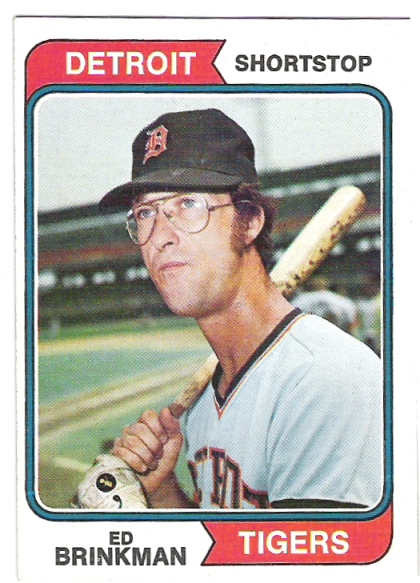
Ed Brinkman 1974 Baseball Card He looked gangly in the field, but he could pick 'em. My thoughts go out to his family and friends. Posted by StatsGuru at 09:33 PM
| Comments (0)
| TrackBack (0)
September 24, 2008
Vernon Passes
Permalink Two-time batting champion Mickey Vernon died this afternoon. He wasn't a great slugger for a first baseman, only reaching .500 in slugging percentage twice. In 1946 after he returned from WWII he slugged .508, then in 1956 at the age of 38 he slugged .511 for Boston. I wonder how much the park in Washington hurt his power? My thought go out to his family and friends. Posted by StatsGuru at 07:01 PM
| Comments (3)
| TrackBack (0)
September 08, 2008
Last of His Kind
Permalink Don Gutteridge passed away Sunday. He was a last connection to one of the few bright spots in St. Louis Browns history: He was listed as the seventh-oldest living former player and was the last living St. Louis Brown who played in the 1944 World Series. During that series, he turned five double plays in one game at second base. Unfortunately, the Browns lost to the Cardinals in their only World Series appearance. My thoughts go out to his family and friends. Posted by StatsGuru at 05:55 PM
| Comments (0)
| TrackBack (0)
September 04, 2008
Todd Cruz Passes
Permalink Todd Cruz passed away while swimming on Tuesday. Cruz played with six major league teams from 1978 to 1984. He broke into the big leagues with the Philadelphia Phillies, then played with Kansas City, the California Angels and Chicago White Sox from 1979-80. He did not play in the majors in 1981, but the following season participated in 136 games with Seattle. My thoughts go out to his family and friends. This is way too young to die. Posted by StatsGuru at 09:54 PM
| Comments (21)
| TrackBack (0)
August 12, 2008
Miley Tragedy
Permalink Redleg Nation asks you to keep former Reds manager Dave Miley in your thoughts. He just lost his 17-year-old son in a car accident. Posted by StatsGuru at 10:41 AM
| Comments (1)
| TrackBack (0)
August 03, 2008
Skippin' Out
Permalink Skip Caray passed away in his sleep: "Our baseball community has lost a legend today," said Braves President John Schuerholz. "The Braves family and Braves fans everywhere will sadly miss him. Our thoughts are with his wife Paula and his children." I always enjoyed Skip's broadcasts on TBS, and thought those productions were some of the best in baseball broadcasting. I'll miss his voice. My thoughts go out to his family and friends. Posted by StatsGuru at 09:56 PM
| Comments (5)
| TrackBack (0)
July 14, 2008
Ricketts Passes
Permalink Dave Ricketts, long time catchng coach for the Cardinals, passed away Sunday: Some called him Dave, most called him Mr. Ricketts, and Yadier Molina, sitting at his locker after the Cardinals' victory Sunday, said he "was like my dad." My thoughts go out to his family and friends. Posted by StatsGuru at 08:48 AM
| Comments (0)
| TrackBack (0)
July 12, 2008
Murcer Passes
Permalink The Yankees said Murcer died Saturday due to complications from brain cancer. He was surrounded by family at Mercy Hospital in his hometown of Oklahoma City, the team said. "Bobby Murcer was a born Yankee, a great guy, very well-liked and a true friend of mine," owner George Steinbrenner said. "I extend my deepest sympathies to his wife Kay, their children and grandchildren. I will really miss the guy." I started watching the Yankees in 1969. Murcer was a star of that team and became one of my favorites. I remember listening to a game (back then, only three of four a week were on TV) when Murcer hit three home runs and drove in five against Kansas City. After the third homer, the announcer said the score was Murcer 5, Royals 0. My thought go out to his family and friends. Posted by StatsGuru at 09:07 PM
| Comments (2)
| TrackBack (0)
June 24, 2008
Start at the Bottom
Permalink Longtime Mets employee Jim Plummer dies way to young. Jim Plummer, who had been with the New York Mets organization since he was Nolan Ryan's minor-league bat boy in 1965, died Tuesday at New York University Medical Center. He was 56. I've had a number of people ask over the years how they might get a job in sports. Plummer's path appears to be a common one. You need to be willing to do the little jobs in the minor leagues and with luck you move up to the major league club. My thoughts go out to his family and friends. Posted by StatsGuru at 02:39 PM
| Comments (0)
| TrackBack (0)
June 17, 2008
John Buzhardt Passes
Permalink John Buzhardt, former major league pitchers, died Sunday. Bob Spear remembers: John Buzhardt and I met at the Mid-Carolina Country Club grill room to talk about his professional baseball career, and seldom has an interview been so entertaining. He pitched well for the White Sox, not so well for his other teams. He's the type of pitcher who would have won a good number of games for a team that could hit, but he never really played for one of those. My thoughts go out to his family and friends. Posted by StatsGuru at 01:12 PM
| Comments (3)
| TrackBack (0)
June 02, 2008
A Pair of Bos
Permalink Big League Stew remembers Bo Diddley's connection to baseball. Posted by StatsGuru at 01:37 PM
| Comments (0)
| TrackBack (0)
May 26, 2008
Sad News
Permalink Geremi Gonzalez died Sunday, struck by lightning. Emergency management official Herman Bracho said Monday that Gonzalez was struck by lightning at a beach. My thoughts go out to his family and friends. Posted by StatsGuru at 12:58 PM
| Comments (0)
| TrackBack (0)
May 22, 2008
Another Fan Death
Permalink A fan died after falling off an escalator at Turner Field, much like this tragedy earlier in the year at Shea. Alcohol may have been involved, Campbell said. My thoughts go out to his family and friends. There's no excuse for this. Our moms told us not to play on the escalator, and we should remember their words of wisdom. Couple with this murder after a Giants game, and it hasn't been a good year for fans. Posted by StatsGuru at 11:45 AM
| Comments (0)
| TrackBack (0)
May 13, 2008
Death in the Red Sox Family
Permalink Terry Francona will miss two games due to the death of his mother-in-law. My condolences go out to Terry and his family. Posted by StatsGuru at 05:42 PM
| Comments (0)
| TrackBack (0)
May 11, 2008
Giant Tragedy
Permalink A young man died after being punched outside AT&T Park on Friday. Anthony Giraudo fell and hit his head on concrete, Gittens said. Posted by StatsGuru at 10:24 PM
| Comments (0)
| TrackBack (0)
May 01, 2008
Bye to Buzzie
Permalink His death was announced by the Seattle Mariners, whose general manager is Bill Bavasi, a son of the former Dodgers GM. He oversaw one of the great eras of Dodgers baseball, from 1951 to 1968. Bob and Peter Bavasi are readers of this site, so my sincere condolences go out to them, and my thought go out to the entire Bavasi family and all Buzzie's friends. Posted by StatsGuru at 08:33 PM
| Comments (1)
| TrackBack (0)
April 19, 2008
Marzano Passes
Permalink Former Red Sox catcher John Marzano passed away this morning: Details still aren't clear at this point, but it appears to be a heart attack. He was 45. Red Sox manager Terry Francona just spoke about it during his daily press conference with the local media. Joe McDonald has a good Marzano story at the link. My thoughts go out to his family and friends. At that young age, there are going to be plenty of the latter. Posted by StatsGuru at 06:33 PM
| Comments (3)
| TrackBack (0)
April 16, 2008
Tragedy at Shea
Permalink A man died Tuesday night when he lost his balance on an escalator at Shea Stadium: Antonio Nararainsami, 36, and several relatives, including his two young daughters, were leaving the stadium at the end of Tuesday night's game against the Washington Nationals when he fell in a section below the left field stands and landed on a concrete floor. Nararainsami, a Guyanese native who lived in Brooklyn, was taken to a hospital, where he was pronounced dead half an hour later. This was the second such accident in Shea's history. My thought go out to Mr. Nararainsami's family and friends. Posted by StatsGuru at 08:43 AM
| Comments (2)
| TrackBack (0)
April 14, 2008
Holmes Passes
Permalink Tommy Holmes passed away earlier today. He held the modern National League hit streak record before Pete Rose passed him. My thoughts go out to his family and friends. Posted by StatsGuru at 08:27 PM
| Comments (1)
| TrackBack (0)
April 09, 2008
Masterson Passes
Permalink Walt Masterson, famous for pitching sixteen shutout innings in a game without getting the decision, passed away in Durham, NC. "Masterson was something out of this world," The Washington Post said the next day. In the 16 innings he was on the mound, he gave up only six hits -- all of them singles -- struck out seven batters and walked six, two on purpose. Masterson walked 50 more than he struck out in 1948. You won't see a pitcher like that starting the all-star game today. My thoughts go out to his family and friends. Update: Peter Gammons writes: Walt Masterson beat the Red Sox 5-1 on June 28, 1952, the first major league game I ever attended. Posted by StatsGuru at 12:52 PM
| Comments (1)
| TrackBack (0)
March 18, 2008
Purkey Passes
Permalink Bob Purkey passed away Sunday. He put in some very good seasons for the Cincinnati Reds, helping them to a World Series appearance in 1961 and following that season with a 23-5 record in 1962. Purkey's strength was his control. He only walked batters once every four innings, but he didn't strike out many more than that. He finished his career with a better than average 3.79 ERA. My thoughts go out to his family and friends. Posted by StatsGuru at 11:59 AM
| Comments (1)
| TrackBack (0)
February 28, 2008
Remembering Wriers
Permalink Alex Belth remembers W.C. Heinz and Myron Cope. Posted by StatsGuru at 02:59 PM
| Comments (0)
| TrackBack (0)
February 09, 2008
Stop Sign
Permalink Karl Ehrhardt passed away. He was the Shea Stadium sign man. My thoughts go out to his family and friends. My favorite was during the 1973 World Series. Charlie Finley had fired one of his second basemen after he made an error. So whenever the A's made an error, Karl held up a sign that said, "You're fired." Maybe that's where Donald Trump got the idea. :-) Posted by StatsGuru at 08:41 AM
| Comments (4)
| TrackBack (0)
January 29, 2008
Death in the Ryan Family
Permalink Bob Ryan, sportswriter for the Boston Globe, lost his son overseas. My condolences to the Ryan family. Posted by StatsGuru at 11:19 AM
| Comments (2)
| TrackBack (0)
January 15, 2008
Bad Day for Tejada
Permalink I doubt Miguel Tejada cares much about the Congressional investigation right now: An older brother of Major League Baseball star Miguel Tejada was killed in a traffic accident Tuesday, the shortstop's Dominican winter league team said. My thoughts go out to Miguel and his family. What is it with motorcycles hitting cars in the D.R.? This sounds similar to the accident that seriously injured Juan Lara. Posted by StatsGuru at 09:54 PM
| Comments (2)
| TrackBack (0)
Report on Kennedy
Permalink Joe Kennedy died of natural causes. Posted by StatsGuru at 12:47 PM
| Comments (1)
| TrackBack (0)
Cardwell Passes
Permalink Don Cardwell passed away on Monday. He was both a Cubs hero and villain: Traded by the Phillies for Tony Taylor and Cal Neeman on May 13, 1960, Cardwell became the first pitcher to pitch a no-hitter in his first start with a new team. Cardwell was not a great pitcher, but with the no-hitter and his run with the 1969 Mets, he's well remembered. My thoughts go out to his family and friends. Posted by StatsGuru at 08:13 AM
| Comments (1)
| TrackBack (0)
January 14, 2008
Podres Passes
Permalink Via Baseball Think Factory, Johnny Podres died on Sunday. He had a fine career and is known best for pitching the Dodgers to a World Series title in 1955. In six series starts, he posted a 2.11 ERA. He also made his mark as a pitching coach: Podres was essentially a three-pitch pitcher - fastball, curveball and changeup - all of which, Zimmer said, were exceptional. He is credited with being one of the greatest masters of the changeup, having taught it to dozens of pitchers, including Curt Schilling and Frank Viola, in later years as a pitching coach with the Red Sox, Twins and Phillies. As a pitching coach, Podres was strictly old school, scoffing at pitch counts, and that was probably the result of having hurled 77 complete games himself. In 1993, he took a Phillies staff that had ranked last in the National League in ERA the previous year to the World Series. The Phillies ERA only dropped a few points, from 4.11 to 3.95, but with the surge in offense in 1993, that drop was good enough to rank the Phillies sixth in ERA. My thoughts go out to his family and friends. Posted by StatsGuru at 08:18 AM
| Comments (1)
| TrackBack (0)
January 09, 2008
Buddy LeRouxPasses
Permalink Buddy LeRoux, a former part owner of the Red Sox, died Monday: He rose from serving as a Red Sox trainer from 1966-1974 to one of its owners. He served as the team's vice president from 1978-1979, then became an owner until 1986. I don't remember the LeRoux era fondly. But LeRoux and his limited partners grew restive when the Red Sox fell from contention and attendance dropped at Fenway Park. Part of the club's decline was due to fiscal belt-tightening and refusal to sign free agents, although it was not clear which general partner ordered the policy. In the event, in 1983, the team suffered its first losing campaign since 1966. On June 6, 1983, at a night benefitting former Red Sox star Tony Conigliaro, incapacitated at age 37 by a heart attack, LeRoux took advantage of a crowded press box by announcing that he and his limited partners were exercising an option in their partnership agreement to overthrow Sullivan and Yawkey and take command of the club. Boston called it the Coup LeRoux. My thoughts go out to his family and friends. Posted by StatsGuru at 09:10 AM
| Comments (0)
| TrackBack (0)
January 05, 2008
Staley Passes
Permalink Jerry Staley passed away Wednesday. Staley pitched well from 1947 to 1961, sometimes quite well. It's an impressive career for someone with a K per 9 of 3.3. His walks allowed were even lower, and I'm guessing the defense behind him were pretty good. My thoughts go out to his family and friends. Posted by StatsGuru at 09:11 AM
| Comments (0)
| TrackBack (0)
January 04, 2008
Death of a Blogger
Permalink Via Instapundit, Andrew Olmstead, a supporter of Baseball Musings from the beginning, died in Iraq. He left a final post for his blog in case this happened. I will miss his comments. My deepest sympathies go out to his family and friends. Posted by StatsGuru at 06:51 PM
| Comments (2)
| TrackBack (0)
December 27, 2007
Beauchamp Passes
Permalink Jim Beauchamp died of leukemia on Thursday. He was an extremely poor hitter for a first baseman/outfielder, even in the deadball era. But he went on to a successful coaching career with the Braves, and was associated with the organization for 22 years. My thoughts go out to his family and friends. Posted by StatsGuru at 11:00 PM
| Comments (0)
| TrackBack (0)
November 23, 2007
Kennedy Passes
Permalink Major league pitcher Joe Kennedy died early Friday morning while at home with his family in Florida, agent Damon Lapa confirmed to ESPN.com. I was impressed with Joe Kennedy's 2004 season, in which he posted a 3.66 ERA while pitching 162 1/3 innings for Colorado. At age 25, I thought he turned a corner, but he was never able to repeat that kind of performance again. My thoughts go out to his family and friends. Posted by StatsGuru at 04:35 PM
| Comments (0)
| TrackBack (0)
August 16, 2007
Hill's Head
Permalink Glenallen Hill is wearing a helmet as he coaches first base for the Rockies. Looks like he's taking the dangers of the position seriously. Good for him, and I hope it starts a trend. The Rockies just took a 3-2 led in the top of the fifth as Holliday drives in Tulowitzki. Troy singles, stole, moved up to third on a wild pitch so he was in position to score on the hit. Update: Atkins and Hawpe add hits to drive in three more runs as the Rockies go up 6-2 on San Diego in their effort to climb in the wild card race. Update: Mike Cameron brings the Padres back to a one run deficit with a three-run homer in the bottom of the fifth. He hit it to dead-center. At PETCO, it's even more impressive. Update: Sledge and Kouzmanoff drive in three more as the Rockies bullpen falls apart. The Padres are up 8-6. Update: The hits keep coming as Pete LaForest homers to chase Affeldt from the game. He faced five batters, didn't get an out, and all five scored. The Padres are still up in an eight-run fifth. Update: The hits keep on coming as the Giles brothers combine for another run as the inning ends with nine runs scoring with two outs and the Padres lead 11-6. Posted by StatsGuru at 11:22 PM
| Comments (5)
| TrackBack (0)
August 14, 2007
Rizzuto Passes
Permalink 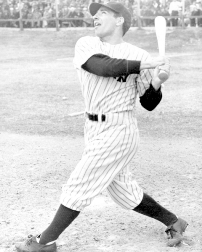
Photo: TSN/Icon SMI Phil Rizzuto, the Hall of Fame shortstop during the Yankees' dynasty years and beloved by a generation of fans for exclaiming "Holy cow!" as a broadcaster, died Tuesday. He was 89. Phil was one of the first broadcasters I heard growing up with New York television. While he was often derided later in his career for his talk of cannoli and leaving the game early, he could be quite incisive. Bill White, his broadcast partner for many years (and one of the best in the business) did a great job of pulling Phil back into the game and bringing out Rizzuto's knowledge of hitting and fielding. Once White left the broadcast booth, Rizzuto's intelligence was lost. Phil was one of my dad's favorite players, and the only time we had a heated baseball argument was when I suggested Rizzuto doesn't belong in the Hall of Fame. However, for two years in a row, he finished 2nd and 1st in the MVP balloting, so voters in the late 1940s thought he was among the best in the game. His 1950 season was quite impressive for a short stop. My thoughts go out to his family and friends. Posted by StatsGuru at 11:54 AM
| Comments (12)
| TrackBack (0)
August 02, 2007
Bridge Collapse Tragedy
Permalink The bridge collapse in Minnesota caused the postponement of today's Twins game, and of the ground breaking ceremony for the new stadium. Joe Christensen reported from the stadium last night. I spoke with Twins president Dave St. Peter, and he said the decision to play tonight's 7:10 game as scheduled was made after speaking with department of transportation officials. The theory was that sending 20,000-25,000 people back into traffic would only make it more congested for the emergency crews. My thoughts go out to the families and friends of the victims. Posted by StatsGuru at 07:58 AM
| Comments (0)
| TrackBack (0)
July 29, 2007
Uncle Bill Passes
Permalink Bill Robinson passed away today: Bill Robinson, the Dodgers' Minor League hitting coordinator, died Sunday, the club announced. He was 64, and cause of death was not known. Memorial services are pending. I worked with Bill for two years at ESPN and I echo Ned Colletti's sentiments. Bill was a great guy, always a gentleman, always appreciative of any help you sent his way. I once reminded him of a catch I saw him make when he was playing for the Yankees in 1969, falling into the stands to steal a home run. He remembered the catch, but felt old when I offered that I was only nine when that happened. I'll always remember him fondly. My thoughts go out to his family and friends. Posted by StatsGuru at 09:11 PM
| Comments (4)
| TrackBack (0)
July 23, 2007
Coaching Tragedy
Permalink Mike Coolbaugh died last night after being hit by a line drive during a AA game: Tulsa Drillers coach Mike Coolbaugh died after being struck in the head by a line drive as he stood in the first-base coach's box during a game. As do mine. His wife is expecting their third child. I can't imagine how horrible the hitter must feel. Base runners are required to wear helmets on the bases, I wonder if coaches be required to wear them after this. Posted by StatsGuru at 10:22 AM
| Comments (2)
| TrackBack (0)
June 24, 2007
Rod Beck Dies
Permalink Former closer Rod Beck passed away Saturday: Neither Thurman nor Phoenix police disclosed the cause of the death. My thoughts go out to his family and friends. Posted by StatsGuru at 04:12 PM
| Comments (1)
| TrackBack (0)
June 16, 2007
Whiteside Passes
Permalink Sports writer Larry Whiteside died Friday: Whiteside had worked for The Boston Globe from 1973 until he was sidelined by Parkinson's disease in the past decade. The paper reported his death on its Web site. My thoughts go out to his family and friends. Posted by StatsGuru at 08:49 AM
| Comments (0)
| TrackBack (0)
May 04, 2007
Doing Everything Wrong
Permalink The police report on Hancock just hit the wires: St. Louis Cardinals pitcher Josh Hancock was drunk at the time of his fatal accident, and marijuana was found in the sport utility vehicle he was driving. So he's intoxicated, speeding, talking on a cellphone and not wearing a seat belt. I hope a few people learn a lesson about risky behavior from this. Maybe this is why Edmonds didn't want the team talking to the press yesterday. Posted by StatsGuru at 11:43 AM
| Comments (22)
| TrackBack (0)
May 01, 2007
Impaired Driving?
Permalink There's a report that alcohol was involved in the death of Josh Hancock: Cardinals pitcher Josh Hancock was in a potentially serious traffic accident less than three days before the one that took his life Sunday, according to police reports. I can't say I'm surprised. My guess is he fell asleep behind the wheel. Posted by StatsGuru at 02:25 PM
| Comments (22)
| TrackBack (0)
April 30, 2007
Remembering Hancock
Permalink The Cardinals hung a Josh Hancock jersey in the dugout and bullpen tonight for their game in Milwaukee. Tim Hudson played with Josh at Auburn, and he received permission to wear JH on the front of his jersey. Posted by StatsGuru at 07:11 PM
| Comments (0)
| TrackBack (0)
April 29, 2007
Josh Hancock Killed
Permalink Josh Hancock died in a car accident this morning: The Cardinals said they were told of the 29-year-old reliever's death by the St. Louis Police Department. The team's home game against the Chicago Cubs on Sunday night was postponed. Hancock pitched his best season in 2006 for the Cardinals. He brought his strikeout rate up and his walk rate down. He was off to another good start this year. My thoughts go out to his family and friends. Update: The St. Louis Post-Dispatch provides more information: Hancock's Ford Explorer slammed into the rear of a tow truck that was parked in the far left westbound lane shortly after 12:30 a.m. The tow truck driver, who was seated in the vehicle at the time, was unhurt. Posted by StatsGuru at 11:46 AM
| Comments (6)
| TrackBack (0)
April 23, 2007
Sad News
Permalink David Halberstam died in a car accident: Halberstam, a New Yorker, was a passenger in a car that was broadsided by another vehicle in Menlo Park, south of San Francisco, San Mateo County Coroner Robert Foucrault said. My thoughts go out to his family and friends. I really enjoyed The Teammates. It gave me a new respect for the Red Sox teams of the 40s. I've read chapters of Summer of '49, also. He had a talent for putting you in the moment with his writing. It's sad to see him go so unexpectedly. Posted by StatsGuru at 10:09 PM
| Comments (2)
| TrackBack (0)
April 17, 2007
Tribute
Permalink Richard Hoyland writes: I'm watching the Braves and the Nats at RFK tonight. The Nats are wearing various versions of Virginia Tech ballcaps. Nice touch---somebody's thinking in that organization. Has anyone noticed if other organizations are doing anything similar? Posted by StatsGuru at 10:14 PM
| Comments (5)
| TrackBack (0)
April 16, 2007
Moment of Silence
Permalink Posted by StatsGuru at 10:22 PM
| Comments (0)
| TrackBack (0)
March 25, 2007
Bailey Passes
Permalink Former Reds catcher Ed Baily died from cancer on Friday: Al Neil, Bailey's brother-in-law, told The Knoxville News Sentinel that Bailey died at Parkwest Medical Center after being diagnosed with throat cancer about six months ago. Bailey posted impressive OBAs for a catcher. However, he wasn't a wiz on the bases, going 2 for 14 in one three year stretch trying to steal. My thoughts go out to his family and friends. Posted by StatsGuru at 08:50 AM
| Comments (2)
| TrackBack (0)
March 15, 2007
Kuhn Passes
Permalink Bowie Kuhn died today. My thoughts go out to his family and friends as they grieve their loss. I'm no fan of the former commissioner, however. Kuhn let his personal animosity toward Charlie Finley get the better of him as he stopped the A's owner from selling three of his stars for big money instead of losing them to free agency. Finely could have used the money to rebuild his club, but instead just saw the players leave with no compensation. That confrontation brought about the rule that the commissioner has to approve cash transactions over a million dollars. It limited teams ability to realize value from their best players. It was done in the name of the fans, that keeping the stars in Oakland the most important thing. But of course, without the cash, Finley couldn't afford to keep them around. It was a bad decision made for the wrong reason. Posted by StatsGuru at 04:54 PM
| Comments (5)
| TrackBack (0)
March 02, 2007
Labine Passes
Permalink Dodger Thoughts remembers Clem Labine, former Dodgers pitcher, on the news of his passing. Seems he had Musial's number. My thoughts go out to his family and friends. Posted by StatsGuru at 02:14 PM
| Comments (0)
| TrackBack (0)
Insensitive Suit
Permalink Cory Lidle's family finds itself sued over the plane accident. The Pastime comments: That's disgusting. Agreed. Baseball Musings is holding a pledge drive in March. Posted by StatsGuru at 08:15 AM
| Comments (14)
| TrackBack (0)
February 22, 2007
DJ Dies
Permalink I just saw on ESPN.com that Dennis Johnson died during practice today. I'm not much of a basketball fan anymore, but DJ was one of my favorites during the Bird era. I loved the way he was able to force opponents to dribble into a dead area of the old Boston Garden floor, then steal the ball. What a tragedy. My thoughts go out to his family, friends and teammates. Posted by StatsGuru at 04:23 PM
| Comments (1)
| TrackBack (0)
February 15, 2007
Honoring Cory
Permalink The Yankees will wear black arm bands to honor the memory of Cory Lidle this season. Posted by StatsGuru at 10:02 AM
| Comments (3)
| TrackBack (0)
February 09, 2007
Hank Bauer Passes
Permalink Bauer died in the Kansas City area, where he made his home, Yankees spokesman Jason Zillo said. I remember hearing this story on a Yankees broadcast when I was young. After Bauer started managing the Orioles, the Yankees came to town one day, and Mantle and Bauer went out on the town. Mantle was so hung over the next day he wasn't in the starting lineup. Late in the game, Mickey was put in to pinch hit. Bauer walks to the mound and tells the pitcher about the night out and Mantle's hangover. Bauer's advice was to throw the ball down the middle, Mantle would be an easy out. Mickey, of course, hits a home run and the Yankees win the game. Unfortunately, the story can't be true. Mantle never hit a home run against a Bauer managed team in a game he didn't start. My thoughts go out to his family and friends. It seems like a lot of ballplayers are dying lately. Posted by StatsGuru at 07:41 PM
| Comments (1)
| TrackBack (0)
February 06, 2007
Burdette Passes
Permalink Lew Burdette died earlier today: Burdette's greatest success came in the 1957 Series when he went 3-0 with an 0.67 ERA while pitching three complete games against the New York Yankees. He capped his performance with a seven-hit shutout in Game 7 at Yankee Stadium, finishing off a run of 24 straight scoreless innings. My thoughts go out to his family and friends. Posted by StatsGuru at 08:55 PM
| Comments (0)
| TrackBack (0)
February 05, 2007
Lanier Passes
Permalink Max Lanier, pitcher for the Cardinals and father of Hal Lanier passed away last week at the ripe old age of 91. Born Hubert Lanier in Denton, N.C., Max Lanier spent 12 seasons with the Cardinals between 1938 and 1951, pitching in the 1942, 1943 and 1944 World Series, posting a 2-1 record in seven games. The Cardinals beat the New York Yankees in 1942, lost a rematch the following year and beat the St. Louis Browns in 1944. Max put up pretty good numbers before WWII. Given that he and Musial played in St. Louis during most of that war, I've always wondered if someone at the St. Louis draft board tried to fix things for the Cardinals by keeping good players on the team out of the service at that time. Given the level of play in the rest of the majors, it's not surprising that a team with Lanier and Stan the Man did so well. My thoughts go out to his family and friends. Posted by StatsGuru at 07:05 PM
| Comments (3)
| TrackBack (0)
Shave and a Haircut
Permalink Steve Barber passed away at a young age on Sunday. Steve Barber, the first 20-game winner in Baltimore Orioles history, died from complications of pneumonia on Sunday night in at a hospital in Henderson, Nev., the team announced Monday. Barber was 67. Barber's career went downhill with the new strikezone in 1969. Through 1968, he posted a 3.18 ERA. After that, it ballooned to 4.17. It's tough to pin it on the strike zone however, since his K per 9 rate was constant at 5.9 per 9. My thoughts go out to his family and friends. Posted by StatsGuru at 03:53 PM
| Comments (1)
| TrackBack (0)
Flight Rules
Permalink Rules enacted after Cory Lidle's plane crash are now permanent: This was revealed as the National Transportation Safety Board released papers Monday detailing its investigation of the Oct. 11 crash that killed Lidle and his flight instructor. Pilots on this route will now need to be in contact with air traffic control. Posted by StatsGuru at 01:32 PM
| Comments (0)
| TrackBack (0)
February 02, 2007
The Penultimate Player
Permalink Ray Berres, the second oldest ex-baseball player passed away: In 11 seasons, Berres hit .216 with three home runs and 78 RBIs in 561 games. He played for the Brooklyn Dodgers (1934, 1936), Pittsburgh Pirates (1937-40), Boston Braves (1940-41) and New York Giants (1942-45). My thoughts go out to his family and friends. I wonder who is now number 2 on the list? Posted by StatsGuru at 07:09 PM
| Comments (1)
| TrackBack (0)
January 29, 2007
Fowler Gone
Permalink Fowler, as pitching coach, won World Series rings with the New York Yankees in 1977 and 1978, under manager Billy Martin, his close friend. Fowler peaked at the end of his career, having three great seasons in relief from 1961-1963. For some reason, in 1961, he had the only high strikeout rate of his career. Do any Dodger historians know why? My thoughts go out to his family and friends. Posted by StatsGuru at 07:29 PM
| Comments (1)
| TrackBack (0)
January 27, 2007
The Other Bing
Permalink Bing Devine passed away today. He made one of the most famous trades in baseball history: Vaughan P. "Bing" Devine, was general manager of the Cardinals from 1957 to 1964 and again in 1967-68, and helped acquire Hall of Fame players Bob Gibson and Lou Brock. The Brock trade with the Cubs is considered one of the most lopsided deals in major league history. I suppose he'll be mourned a bit less in Chicago. :-) My thoughts go out to his family and friends. Posted by StatsGuru at 06:23 PM
| Comments (1)
| TrackBack (0)
January 26, 2007
Lang Passes
Permalink Bill Madden remembers Jack Lang. There will be an empty chair on the dais at the Baseball Writers' Association of America's annual dinner Sunday at the New York Hilton, a tribute to our intrepid leader, Jack Lang, who died at 85 of liver disease yesterday morning at the Carillon Rehabilitation Center in Huntington, L.I. Lang made the congratulatory call each year to the players inducted into the Baseball Hall of Fame. My thoughts go out to his family and friends. Posted by StatsGuru at 08:41 AM
| Comments (0)
| TrackBack (0)
January 21, 2007
Ruhle Passes
Permalink Vern Ruhle passes away Saturday night. Ruhle wasn't much of a strikeout pitcher, but he showed good control and had a solid 13-year career. His best season was 1980 when he posted a 12-4 make for the Astros with a 2.37 ERA. My thought go out to his family and friends. Posted by StatsGuru at 12:09 PM
| Comments (3)
| TrackBack (0)
Fan to the End
Permalink Jay's Giants Blog notes the passing of William James, long time Giants fan and friend to SABR: James's love of the game did not end when he passed away. He bequested a sum of over $30,000 to SABR. The Board of Directors is considering ways to use the gift. One possibility would be to establish funding for research into the history of fans. Another thing that would be useful is combining with Retrosheet to make available a fully relational, publicly assessable database of the retrosheet data. The data, in it's current format is clumsy to use. For $30,000 you could get a nice server and some volunteers to transform the data into nice SQL tables. SABR could then publish the structure of the tables and allow an interface for SQL queries to the data. That would open up research to many more people. Posted by StatsGuru at 11:10 AM
| Comments (4)
| TrackBack (0)
January 06, 2007
Death in the Family
Permalink Brandon Webb lost his father-in-law. From the article, he sounded like a fine person. My condolences to the family. Posted by StatsGuru at 05:57 PM
| Comments (0)
| TrackBack (0)
January 03, 2007
Oldest Red Sox Fan Passes
Permalink The Boston Globe notes the passing of Kathryn Gemme at 112 years. Not only did she attend Fenway Park the year it opened, but was one of the few people alive who was old enough to remember all of the Red Sox championship seasons. Long before any of today's players were alive, Mrs. Gemme used to sit next to a crystal radio set summer after summer and listen to the games, filling page after page with notes about each at-bat. My grandmother Pinto didn't score the games, but she used to listen and tell my father and brothers the details when they came home from work. I suspect that was pretty common in the era of day games. My condolences to her family and friends. What a great age, however. Posted by StatsGuru at 08:33 AM
| Comments (2)
| TrackBack (0)
Oldest Red Sox Fan Passes
Permalink The Boston Globe notes the passing of Kathryn Gemme at 112 years. Not only did she attend Fenway Park the year it opened, but was one of the few people alive who was old enough to remember all of the Red Sox championship seasons. Long before any of today's players were alive, Mrs. Gemme used to sit next to a crystal radio set summer after summer and listen to the games, filling page after page with notes about each at-bat. My grandmother Pinto didn't score the games, but she used to listen and tell my father and brothers the details when they came home from work. I suspect that was pretty common in the era of day games. My condolences to her family and friends. What a great age, however. Posted by StatsGuru at 08:33 AM
| Comments (2)
| TrackBack (0)
January 02, 2007
A Bit of History Passes
Permalink Ernie Koy played for a short time in the major leagues, but was involved in a bit of history. He passed away on New Year's day. He hit a three-run homer in his first at-bat in the majors and finished his career average with a .279 average, 36 home runs and 260 RBIs. He played in the first televised baseball game and the first night game at Ebbets Field. My thoughts go out to his family and friends. Posted by StatsGuru at 07:55 AM
| Comments (1)
| TrackBack (0)
December 28, 2006
Chris Brown Passes
Permalink Chirs Brown died under mysterious circumstances: Firefighters arrived about 1:30 a.m. on Nov. 30 at the home Brown owned in Sugar Land and found it "fully engulfed" in flames, Adolph said. Firefighters found no people or furniture inside, he said, and neighbors told authorities no one had lived there for some time. Arson is suspected as the cause of the fire. As the article points out: He is the second member of the mid-1980s Giants infield to die this month. Jose Uribe played shortstop for the team from 1985-92. He died at 47 in a Dec. 8 car crash in the Dominican Republic. A friend who saw this stoy last night wrote me: Look out Will Clark and Robbie Thrompson. My thoughts go out to Brown's family and friends. Posted by StatsGuru at 08:43 AM
| Comments (6)
| TrackBack (0)
December 22, 2006
Career Interrupted
Permalink Cecil Travis passed away recently at the age of 93: Cecil Travis, a sweet-swinging infielder with the Washington Senators in the 1930s and '40s, whose stellar career was interrupted by World War II, died Dec. 16 of congestive heart failure at his farm in Riverdale, Ga. He was 93 and was one of the oldest surviving former Senators. Travis was part of the hit trio of 1941. Williams led the league with a .406 batting average, DiMaggio put together a 56-game hit streak, and Travis collected 218 hits to lead the league. He was 27 in 1941, just at his peak, but he went off to war and didn't play again until the end of 1945. He was not the same player and didn't last long, playing a full but disappointing season in 1946. Here's a player that would be interesting to project out over his full career. He put down enough of a base that I bet models could do a pretty good job of filling out his career. My thoughts go out to his family and friends. Correction: Changed yesterday to recently. Posted by StatsGuru at 06:36 AM
| Comments (3)
| TrackBack (0)
December 18, 2006
Larry Sherry Passes
Permalink Larry Sherry died from cancer at the age of 71. His brother Norm remembers him: "He was a tough competitor. He was all business when he put that uniform on," Norm Sherry said. "He had a way about him when he came in from the bullpen, he was a mean pitcher, he didn't give any ground to anybody. My thoughts go out to his family and friends. Posted by StatsGuru at 08:07 PM
| Comments (1)
| TrackBack (0)
December 08, 2006
Jose Uribe Dies
Permalink Jose Uribe died in a car accident today: The Dominican National Police said the 47-year-old Uribe's sport utility vehicle crashed about 3 a.m. on a highway about 30 miles west of the capital, Santo Domingo. Police said the cause of the crash was under investigation. Uribe's wife died after giving birth to their third child in 1988. Now their father dies young as well. That's too much tragedy for any family. My thoughts go out to them, the rest of the Uribe family and his friends. Posted by StatsGuru at 01:32 PM
| Comments (3)
| TrackBack (0)
November 24, 2006
Dobson Dies
Permalink Pat Dobson passed away at age 64. Dobson, one of four starters to win 20 games for the Orioles in 1971, died suddenly Wednesday night in the San Diego area, the San Francisco Giants said Thursday. He was 64. The 1971 Orioles boasted one of the great rotations of all time. The four main pitchers started 142 games and won 81 of them, losing just 31. Their combined ERA was 2.89 over 1081 innings. Just to top it off, Baltimore won the division by so many games that they didn't make up four rainouts. My thought go out to Dobson's family and friends. Posted by StatsGuru at 08:14 AM
| Comments (1)
| TrackBack (0)
November 08, 2006
Pray for Sain
Permalink Johnny Sain, a three-time All-Star who teamed with Warren Spahn to make up one of baseball's most fabled pitching tandems, died Tuesday. He was 89. Sain won 20 games four times and posted a 3.49 ERA in 11 seasons. He's one of many players who lost time to World War II. My thoughts go out to his family and friends. Update: David Gertsman sends along this article examing the link between Sain and Leo Mazzone. Mazzone told Schwarz of a conversation he had with Sain in 1979, two years after the Boston Braves' old ace (Spahn and Sain and Two Days of Rain) tried to turn around the 1977 Atlanta Braves' staff (at least he had Phil Niekro and Dick Ruthven to work with then... of course, they also had Eddie Solomon and Buzz Capra). Sain was apparently still employed by the Braves in some capacity at that time, and Mazzone was the organization's newly-hired minor league pitching coordinator. Mazzone was, by his own admission, highly impressed by Sain and his unconventional methods, telling Schwarz that Sain was the first person he talked to who didn't have all the same old cliches. Posted by StatsGuru at 08:11 AM
| Comments (1)
| TrackBack (0)
November 04, 2006
More on Lidle
Permalink Here's more on the Lidle plane crash: The report said the airplane was flying along the East River between Manhattan and Queens when it attempted a U-turn with only 1,300 feet of room for the turn. To make a successful turn, the aircraft would have had to bank so steeply that it might have stalled, the NTSB said in an update on the crash. The NTSB did not determine who was at the controls. Posted by StatsGuru at 09:19 AM
| Comments (1)
| TrackBack (0)
November 03, 2006
It Was the Wind
Permalink The NTSB determined the cause of Corey Lidle's crash: The National Transportation Safety Board ruled that the wind, coupled with the pilot's attempt at turning too sharply over New York's East River, forced the aircraft over Manhattan and into the side of a high-rise building. It seems like the wind turned a small mistake into a deadly one. Posted by StatsGuru at 04:07 PM
| Comments (0)
| TrackBack (0)
October 29, 2006
I Must Have ESPN
Permalink This is just too weird. For some reason, I was thinking about how I don't watch the NBA anymore, and really haven't followed it since the Larry Bird/Magic Johnson era. I was wondering what's going on with Red Auerbach, and I couldn't remember if he was still alive. So today, I open up the ESPN home page, and there's the story that Red died yesterday. I have a Red Auerbach story. I was traveling from Boston to New York on the Eastern shuttle in the late 1980's. As I boarded the plane, I noticed Red was waiting to board, smoking a cigar. At that time, smoking was banned on short flights. Red was waiting for the last minute to get on the plane so he could finish his cigar. As he walked off the plane in New York, he held a cigar in his mouth, and the second it was legal he lit the stogie. During the 1970s, CBS gave a Red a half time feature, Red on Roundball. He would use current and former NBA players to teach to basics of basketball. It was a great series, fun to watch and educational at the same time. Red led a long and successful life. He's commemorated in championship banners and a Boston statue (anyone can sit on a bench with Red). We all should be so accomplished. My thoughts go out to his family and friends. Posted by StatsGuru at 09:12 AM
| Comments (2)
| TrackBack (0)
October 28, 2006
Joe Niekro Passes
Permalink Niekro died Friday in Florida from a brain aneurysm at age 61. Joe was known for his sense of humor: Ashby said Niekro also would send sports writers scrambling by starting a false rumor within earshot. Niekro had his own scandal as well: In 1985, the Astros traded the 40-year-old Niekro to the New York Yankees. He finished his career in Minnesota, where he pitched in the World Series for the only time, in 1987. It's a classic highlight, as he tries to toss the file away without the umpires seeing it. Joe and his brother Phil combined to win 539 games in the majors. Joe's son Lance is currently playing for the Giants, making them one of the many successful multi-generational families. My thoughts go out to his family and friends. Posted by StatsGuru at 06:40 PM
| Comments (2)
| TrackBack (0)
October 27, 2006
Sad News
Permalink A missing Tampa Bay Devil Rays minor league pitcher was found dead. The body of a Tampa Bay Devil Rays minor league pitcher missing after his canoe capsized over the weekend in Independence, Va., was found. My condolences to his family and friends. Posted by StatsGuru at 12:56 PM
| Comments (0)
| TrackBack (0)
October 23, 2006
Remembering Nelson
Permalink The Soxaholix mourns the passing of Nelson de la Rosa. Posted by StatsGuru at 10:46 AM
| Comments (0)
| TrackBack (0)
October 17, 2006
Lidle Remembered
Permalink His family and friends bid Corey Lidle farewell today. Yankees pitcher Cory Lidle was remembered as "a loving husband and an awesome father" Tuesday at a memorial attended by family, friends and teammates of the avid yet inexperienced pilot who was killed during an aerial tour of New York City. It sounds like a sendoff Lidle would appreciate. On another note, take a look at the picture with the article. Doesn't the Yankees brain trust look like they are auditioning for a new FBI TV series? Numb3rs meets Criminal Minds. :-) Posted by StatsGuru at 04:16 PM
| Comments (0)
| TrackBack (0)
October 13, 2006
Johnny Callison Passes
Permalink Former Phillies outfielder Johnny Callison died yesterday. Callison was born in Oklahoma and went on to become a three-time All-Star during his 16-year career. A left-handed hitter with a smooth swing, Callison started with the Chicago White Sox in 1958 and established himself as one of the top players in the National League after being traded to Philadelphia two years later. I vaguely remeber him with the Yankees at the end of his career. He posted outstanding OBAs very early in his career, but couldn't carry them through at his peak age. He did replace his times on with power however, twice driving in over 100 runs. My thoughts go out to his family and friends. Posted by StatsGuru at 06:15 PM
| Comments (4)
| TrackBack (0)
Flying Corey Lidle's Flightpath
Permalink Jeff Wise flys Corey Lidles route for Popular Mechanics and notes the pleasures and pitfalls of that airspace. Compared to the Hudson, the East River is very narrow as it doglegs right, then left. You don't have much time to watch Brooklyn and Queens scroll past to the east before you bank west and cruise over Central Park. Then you tell LaGuardia tower that you're going back to the VFR corridor on the Hudson, and you switch the radio back to the corridor frequency. Posted by StatsGuru at 04:01 PM
| Comments (0)
| TrackBack (0)
October 12, 2006
Insurance Exclusion
Permalink If Corey Lidle was indeed piloting the plane, his beneficiary won't be able to collect on his insurance policy: The plan calls for a $450,000 life insurance benefit and has an accidental death benefit of $1.05 million. However, the plan - which applies to all big leaguers - contains an exclusion for "any incident related to travel in an aircraft ... while acting in any capacity other than as a passenger." His wife will get the widow's benefit: Lidle had 9 years, 100 days of major league service - 72 days shy of being fully vested. Because of that, his wife would be entitled to about $165,000 to $170,000 annually, which is 95 percent of the maximum, an amount indexed for inflation. There is an additional dependent benefit. Posted by StatsGuru at 09:19 PM
| Comments (1)
| TrackBack (0)
A Pilot Reflects
Permalink James Fallows flew the same model of plane as Corey Lidle. He reflects on the dangers faced by inexperienced pilots. Posted by StatsGuru at 08:29 PM
| Comments (0)
| TrackBack (0)
Remembering Lidle
Permalink ArmChairGM set up a memorial page for Corey Lidle. Feel free to share your thoughts, pictures, etc. on the late pitcher there. Posted by StatsGuru at 01:22 PM
| Comments (0)
| TrackBack (0)
Silver Lining?
Permalink It didn't take long for people to try to make money off Corey Lidle's death. Posted by StatsGuru at 10:07 AM
| Comments (2)
| TrackBack (0)
Hayes on Lidle
Permalink Marcus Hayes covered Corey Lidle in Philadelphia. It's probably the most balanced piece on Lidle I've seen so far: Upon his trade, Lidle indicted his former teammates for not playing hard all the time, an indictment he recanted a day later. It also mentions that Lidle's family was flying home to California at the time of the crash on a commercial airline, hence the delay in contacting them and confirming his death. Posted by StatsGuru at 08:22 AM
| Comments (2)
| TrackBack (0)
No Mayday
Permalink The latest reports on Corey Lidle's plane crash backs off an earlier report that the plane sent a distress call. Federal investigators are backing away from an earlier report of a distress call from Cory Lidle's plane. Posted by StatsGuru at 08:03 AM
| Comments (0)
| TrackBack (0)
October 11, 2006
Remembering Corey
Permalink The AP rounds up reactions to Corey Lidle's death from his former teammates and coaches. Posted by StatsGuru at 10:25 PM
| Comments (0)
| TrackBack (1)
Lidle's Plane?
Permalink Jason Beck writes: A news station in New York (but I heard a report on WBZ in Boston) that the plane that hit the NYC building was registered to Corey Lidle. This is far from verified, but that "news" would be worthy of your site. I have not found anything on the internet. If any of you do, please send it my way. Update: Ron Steinfeld writes: Plane was registered to Cory Lidle - WCBS Channel 2 report. The story is on the front page of CBS News. Fox News is now reporting Lidle piloted the plane and is dead. Update: Here's the ESPN story. This is the second Yankees player to die in a plane crash. Thurman Munson died in 1979 trying to learn to fly a jet. Update: I just heard Lidle just got his pilots license. Update: Okay, now I'm hearing he had his pilots license for seven months and had 200 hours of flight time. Update: I'm surprised some people think this suicide. There is a passenger reported on the plane, and suicides don't usually take someone with them. Also, these little planes, in the hands on inexperienced pilots in bad weather are very dangerous. Update: This really takes me back. I remember in the summer of 1979 eating dinner with my family. The news was on in the next room and we suddenly heard that Thruman Munson died in a plane crash. My dad and I rushed into the living room to watch the TV reports. I also remember visiting friends during Christmas vacation and hearing about Clemente's plane crash. Both were shocking. My thoughts go out to his family and friends, and to all those who are suffering due to this crash. Update: Jason McAdams sends this link: The Phillies weren't enamored of pitcher Cory Lidle's hobby of flying a four-seat airplane. Update: Bloomberg is holding a news conference and won't confirm Lidle died because they haven't contacted next of kin.
"He was probably my best student," Stanger said in a telephone interview. "He learned very, very quickly, and a lot of it is desire. He had huge desire. Update: Mayor Bloomberg says only two people, not four died, an instructor and a student. Fox is now reporting that the plane issued a distress call. Update: NBC says it has confirmation that Lidle was on the plane: A law enforcement official in Washington, speaking on condition of anonymity, said Lidle was on the plane. And Federal Aviation Administration records showed the single-engine plane was registered to the athlete, who just days ago -- after the Yankees' humiliating elimination from the playoffs -- told reporters that he was getting his pilot's license. Update: Ballbug is aggregating news stories on this. Posted by StatsGuru at 04:46 PM
| Comments (26)
| TrackBack (1)
October 07, 2006
Buck O'Neil Passes
Permalink O'Neil was a smooth fielder and a two-time league-leading hitter with the Kansas City Monarchs, one of the Negro leagues' most acclaimed teams, and he also managed them. He spent more than three decades working in the Chicago Cubs' system, becoming one of organized baseball's first black scouts and then the first black coach in the majors. In all, his baseball career spanned seven decades. For the most recent generations of baseball fans, those born long after baseball became integrated, Buck was the window into the segregated past. His dignity and good humor will be missed. My thoughts go out to his family and friends, and all the people he touched. Posted by StatsGuru at 08:52 AM
| Comments (5)
| TrackBack (0)
September 19, 2006
No More Thrifty Trades
Permalink Syd Thrift, a former general manger of the Pittsburgh Pirates who spent nearly a half century in baseball, died at 77. Can you think of a better name for a GM, especially one who runs a low budget club? My thoughts go out to his family and friends. Posted by StatsGuru at 04:33 PM
| Comments (0)
| TrackBack (0)
August 05, 2006
Auker Passes
Permalink Elden Auker, the last member of Detroit's first World Series championship team passed away: Elden Auker, the submarine-style pitcher who struck out Babe Ruth, faced Dizzy Dean and helped the Detroit Tigers win their first World Series championship, died Friday. He was 95. Alan King used to do a routine called "survived by wife." This is the best I've seen: Auker is survived by his wife of 73 years, Mildred, and a son, Jim. That's impressive. You can read more about Auker in the first chapter of The Only Game in Town. My thoughts go out to his family and friends. Posted by StatsGuru at 08:54 AM
| Comments (0)
| TrackBack (0)
July 07, 2006
Death of a Ball Player
Permalink Minor Leaguer Steve Martin died in a car accident after being released: Steve Martin's car crossed the center line and veered off a county road, then struck a tree and guardrail and overturned about 2 a.m. Thursday, according to a sheriff's report. My thoughts go out to his family and friends. Posted by StatsGuru at 08:29 AM
| Comments (0)
| TrackBack (0)
June 11, 2006
Moe No More
Permalink Moe Drabowsky passed away on Saturday. He seemed like the kind of person that could make you laugh. My thoughts go out to his family and friends. Posted by StatsGuru at 09:12 AM
| Comments (1)
| TrackBack (0)
June 06, 2006
Gregg Dies
Permalink Former umpire Eric Gregg, who suffered a stroke Sunday, passed away last night. My thoughts go out to his family and friends. Posted by StatsGuru at 07:59 AM
| Comments (4)
| TrackBack (0)
June 05, 2006
Fanclub Founder Murdered
Permalink Via Deadspin, the founder of the Grady's Ladies fan club was killed in a murder-suicide. My thoughts go out to her family and friends. Posted by StatsGuru at 01:40 PM
| Comments (1)
| TrackBack (1)
May 14, 2006
Sad News
Permalink Juilan Perez of the Braves died today. Julian Perez, an Atlanta Braves scouting supervisor who had been with the organization in 1992, was killed in a car accident early Sunday in San Juan, Puerto Rico. My thoughts go out to his family and friends. Posted by StatsGuru at 07:56 PM
| Comments (0)
| TrackBack (0)
April 28, 2006
Howe Gone
Permalink Ben Kabak just informed me that Steve Howe died this morning in a car accident. Ben supplies the links to the stories at Off the Facade. My thoughts go out to his family and friends. Posted by StatsGuru at 07:33 PM
| Comments (0)
| TrackBack (0)
April 20, 2006
Sad News
Permalink The Yankees lost two members of their family Wednesday: New York Yankees minor league manager Oscar Acosta and team official Humberto Trejo were killed in a car accident in the Dominican Republic, the New York Post reported Thursday. My thoughts go out to their family and friends. Posted by StatsGuru at 08:03 AM
| Comments (0)
| TrackBack (0)
March 13, 2006
Puckett Honored
Permalink The Minnesota Twins held a memorial for Kirby Puckett at the Metrodome yesterday. Kent Hrbek was the star of the service: Hrbek, the hometown boy who played first base on both of Minnesota's championship teams and batted right behind Puckett, was cheered louder than any of the speakers. My good friend Jim Storer named his dog Kirby, and Jim wasn't even a Twins fan. As a player, everybody loved him. Posted by StatsGuru at 08:40 AM
| Comments (5)
| TrackBack (0)
March 09, 2006
Saving His Sister
Permalink Kirby Puckett's death may save the life of his sister: Puckett's former wife, Tonya, tells the Star Tribune in Minneapolis that one of Puckett's organs may be a match for his sister, Jackie. She lives outside of Chicago and has kidney disease. Kirby may live on in a number of different people. Thanks to MJ Sunshine for the link. Baseball Musings is conducting a pledge drive in March. Click here for details. Posted by StatsGuru at 03:45 PM
| Comments (0)
| TrackBack (0)
March 07, 2006
Puckett Roundup
Permalink With the untimely death of Kirby Puckett last night, the blogosphere remembers the Twins centerfielder. Jay Jaffe is saddened by the good and the bad of Puckett's life. Larry Mahnken notes that Kirby coined the nickname "Donnie Baseball." Baseball Frank notes how Kirby's leg-lift trigger changed his game. Aaron Gleeman remembers his mom's stroke. The Baseball Crank asks us not to forget Puckett, the player. Ivy Chat has similar thoughts. Nick and Nick write a rare joint post to express their grief. Seth Speaks rounds up all the links he can find on the rotund centerfielder. Redleg Nation notes that it was fun to watch Kirby play. Brew Crew Ball is glad Puckett was elected to the Hall of Fame. Jeri at Minor League Baseball gets the last word. Feel free to add your own thoughts in the comments, or send a trackback to this post. Update: You can also leave your thoughts about Kirby here. Update: Chad Finn adds his thoughts. Posted by StatsGuru at 07:35 AM
| Comments (8)
| TrackBack (1)
March 06, 2006
Puckett Passes
Permalink Kirby Puckett passed away this evening: "On behalf of Major League Baseball, I am terribly saddened by the sudden passing of Kirby Puckett," baseball commissioner Bud Selig said. "He was a Hall of Famer in every sense of the term. I loved watching Kirby from the first moment I saw him. I wasn't that impressed with his stats early on. He had a high batting average, but that was it. Then, in his third year he developed power and started getting on base more. Combined with his centerfield defense, he turned into a great all around ballplayer. My thoughts are with his family and friends. Update: Batgirl offers a fitting eulogy. Posted by StatsGuru at 08:53 PM
| Comments (6)
| TrackBack (1)
February 27, 2006
Guerrero Tragedy
Permalink Vald Guerrero lost three cousins in a car accident, and is temporarily away from the Angels camp. My condolences go out to Vlad and his family. Posted by StatsGuru at 04:11 PM
| Comments (0)
| TrackBack (0)
February 20, 2006
The Voice of Saturday Baseball
Permalink Curt Gowdy passed away today. When I first started watching baseball, I remember Curt calling the games for NBC. He and Tony Kubek were the announcers on Saturday afternoon and in the post season. The thing I remember most about their broadcasts from the early 1970s was the use of the split screen to show both the batter/pitcher matchup and the pitcher/runner on first battle. My thoughts go out to his family and friends. Posted by StatsGuru at 12:15 PM
| Comments (6)
| TrackBack (1)
January 29, 2006
Death in the Family
Permalink My aunt, Sister Philomena Pinto passed away on Friday. We were down in the New Haven area for the wake today. At one point in her career she was stationed in St. Louis in the neighborhood where Yogi Berra and Joe Garagiola Sr. grew up. She met both men at various times, making me very jealous. :-) So we get home, and I call my sister's house, and she asks, "Did you see Yogi's aunt?" It turns out Yogi Berra's aunt is at the convent, and no one told me! With luck, I'll run into her tomorrow at the funeral. Here's my favorite Sister story. My aunt taught elementary school for many years in The Bronx. Many years later, she hears one of my cousins talking about John Gotti. Sister pipes up with, "Don't you say anything bad about John Gotti. He's a wonderful man." It turns out that the convent hired a painter and paid him up front. He worked for one day and didn't come back, leaving the place a mess. Gotti walks in (I can't remember if he was going to church or taking his kids to school) and asks, "Sisters, what happened here." The nuns told him the story and asked Gotti to pray for them. Mr. Gotti agreed to pray for them. The next day the painter shows up, gives them back all the money and finishes the jobs. And my aunt thinks Gotti's prayers were responsible. She was a good woman and lived to a ripe old age. I'm sure she'll rest in peace. Posted by StatsGuru at 08:31 PM
| Comments (6)
| TrackBack (0)
January 10, 2006
Snow Melts Away
Permalink Jack Snow, former NFL player and broadcaster and father of first baseman J.T. Snow, died yesterday. My thoughts go out to J.T., his family and friends. Posted by StatsGuru at 08:46 AM
| Comments (3)
| TrackBack (0)
December 29, 2005
Hendricks Laid to Rest
Permalink Funeral services for Elrod Hendricks were held today. At least 50 former Orioles players, coaches and clubhouse personnel were in attendance, including Hall of Famers Earl Weaver, Brooks Robinson, Jim Palmer and Eddie Murray, as well as Cal Ripken, Boog Powell, Rick Dempsey, Ken Singleton, Mike Flanagan, B.J. Surhoff and Paul Blair. That's certainly an all-star send off. Be sure to check out the photo essay as well. Posted by StatsGuru at 05:23 PM
| Comments (1)
| TrackBack (0)
December 22, 2005
Elrod Hendricks Passes
Permalink Elrod Hendricks passed away yesterday, and John Eisenberg of the Baltimore Sun remembers the longtime Orioles catcher and coach: Six years ago, I undertook a massive assignment, publishing an oral history of the Orioles, the first of its kind. I interviewed dozens of former players, coaches and managers, gathering hundreds of hours of tape. My session with Elrod was the longest. I lost track of time. I started watching baseball in 1969, and the Orioles had a catching platoon of Elrod Hendricks and Andy Etchebarren. I thought those were both great names. Both were Earl Weaver type players. Neither hit for a high batting average, but both drew a decent number of walks. Looking at that 1969 team now, they've been very successful since leaving the playing field. An extraordinary group of players. My thought go out to Elrods family and friends. Posted by StatsGuru at 08:59 AM
| Comments (2)
| TrackBack (0)
December 02, 2005
Power in Syracuse
Permalink Sean Kirst looks back at Vic Power's time in a segregated Syracuse, including his friendship with "Lottie the Body." Before all that, in Syracuse, she spent time with a lonely ballplayer named Vic Power. She laughed this week when asked if she ever dated him. She said he used to come around to see her at the Elks Club, and that what she remembers about him are "secret" and "intimate things." Update: Here's more information on Lottie Graves. Posted by StatsGuru at 10:10 AM
| Comments (0)
| TrackBack (0)
November 29, 2005
Vic Power Passes
Permalink Former first baseman Vic Power is no longer with us. Power died of cancer Tuesday in a hospital in this suburb of San Juan, said his sister, Carmen Pellot Power. Power did not live up to his name, slugging just .411 for his career. That's why you see stolen bases and a gold glove as his career highlights. He's noted for being one of the first Hispanic players in the game, although there were a few white Cubans before Power. I think it's safe to say Vic was one of the first Hispanics that didn't look white. My condolences to his family and friends. Posted by StatsGuru at 11:38 AM
| Comments (5)
| TrackBack (0)
October 30, 2005
Al Lopez Passes
Permalink Lopez was best known for being the only AL manager to lead teams that finished ahead of the New York Yankees between 1949-64. He helped the Indians to the 1954 pennant and, until last week, was the last manager to lead the White Sox to the World Series -- their 1959 loss to the Los Angeles Dodgers. Lopez posted an impressive record as a manager, compiling 15 consecutive winning seasons with Cleveland and Chicago. His career winning percentage is an impressive .584, which would be good for 95 wins in a 162 game season. My thoughts are with his family and friends. Posted by StatsGuru at 06:44 PM
| Comments (2)
| TrackBack (0)
October 25, 2005
Mara Dies
Permalink Wellington Mara passed away today. There's no connection to baseball here other than the Giants used to play at Yankee Stadium, but I'm a life long Giants fan. My thoughts are with his family and friends. Posted by StatsGuru at 01:33 PM
| Comments (2)
| TrackBack (0)
September 26, 2005
R.I.P Don Adams
Permalink Don Adams, the star of Get Smart, passed away today. The show made me laugh as a child, and ten years after it was cancelled my college roommates and I still enjoyed watching it in reruns. Like Bugs Bunny cartoons, you got the jokes at a totally different level as you grew up. My thought go out to his friends and family. In an odd coincidence, Adams death is bringing new readers to this site. Last week, and the Royals kept beating the Tigers to stay at 99 wins, I made a series of references to Don Adams' Get Smart co-star, Barbara Feldon. Feldon played Agent 99 on the show. Amazingly, a Google search for Barbara Feldon brings up Baseball Musings high on the list. So thanks, Don, for inspiring the posts. You made me laugh, and I consider that a great gift. Posted by StatsGuru at 09:34 PM
| Comments (1)
| TrackBack (0)
September 18, 2005
N-Man Dies
Permalink Donn Clendenon passed away yesterday. Clendenon hit three home runs and had four RBI in the Mets' five-game victory over the Baltimore Orioles. He hit .274 with 159 home runs and 682 RBI in 12 seasons in the major leagues with Pittsburgh, Montreal, the Mets and St. Louis. I have a friend who likes to pronounce both n's in Donn. I'm not sure how many players have every syllable of their name end in n. :-) My thoughts go out to his family and friends. Posted by StatsGuru at 08:29 AM
| Comments (1)
| TrackBack (0)
September 14, 2005
Clemens Pitches to Honor Mother
Permalink Roger Clemens lost his mother today, but will pitch tonight vs. the Marlins. My thoughts go out to Roger and his family. Posted by StatsGuru at 07:18 PM
| Comments (0)
| TrackBack (0)
August 09, 2005
Gene Mauch Passes
Permalink Sad news this morning as Gene Mauch loses his battle with cancer. A big league skipper for 26 years, Mauch was named National League manager of the year three times. He ranks sixth in baseball history with 3,938 games managed, and is 11th on the career victories list. I remember Mauch as being the master of the first inning one-run strategy. He would use bunts and steals to get men in scoring position because he felt scoring first was very important to winning a game. I always wondered how many runs all those first inning outs cost him in his career. My thoughts go out to his family and friends. Posted by StatsGuru at 07:00 AM
| Comments (2)
| TrackBack (0)
June 22, 2005
Kile Anniversary
Permalink Viva El Birdos remembers Darryl Kile on the anniversary of his death. Update: Added the link. Posted by StatsGuru at 02:57 PM
| Comments (2)
| TrackBack (0)
June 13, 2005
Death of a Bat Maker
Permalink Sean Kirst remembers Joe Kren. Joe was the last member of the Kren family, baseball bat manufacturers in Syracuse. There was one catch. Legend can be a hard thing to prove. Joe said most famous ballplayers of his day were under contract to Hillerich & Bradsby, makers of Louisville Sluggers. If they preferred Kren bats, he said, they often used them on the sly, which is why so many people forgot about the Krens. There's also a good anecdote about Sammy Sosa and corking. Well worth the read. Posted by StatsGuru at 08:12 PM
| Comments (11)
| TrackBack (0)
May 16, 2005
Head Muse
Permalink Charlie Muse, the creator of the modern batting helmet, passed away. His contribution to the game no doubt saved some players careers and possibly their lives. My thoughts go out to his family and friends. Posted by StatsGuru at 04:32 PM
| Comments (0)
| TrackBack (1)
April 26, 2005
Remembering Earl Wilson
Permalink Jeff Kallman at The Catbird in the Nose Bleed Seats remembers the recently departed Earl Wilson. Wilson hit 35 home runs in 740 AB as a pitcher, a rate of 1 HR every 21 AB. Lots of position players wish they had that kind of rate. Military service had kept Wilson from becoming the first black player on the Red Sox, the honour falling in due course to Pumpsie Green, and now he would be traded to the Tigers (in June) for an outfielder named Don Demeter. “And Earl Wilson hit more home runs as a pitcher for Detroit,” fumed the journalist David Margolick, still steaming after all those years, “than Demeter hit as an outfielder for the Red Sox.” Posted by StatsGuru at 02:38 PM
| Comments (6)
| TrackBack (0)
March 17, 2005
Monster No More
Permalink Dick Radatz passed away yesterday after an accidental fall. Radatz regularly pitched multiple innings of relief, long before pitchers evolved into one-inning specialists. Here's his page from BaseballReference.com. Those are impressive strikeout numbers for his first four seasons. My thoughts go out to his family and friends. Posted by StatsGuru at 09:35 AM
| Comments (1)
| TrackBack (0)
March 04, 2005
Mahler Gone
Permalink Sorry I didn't see this sooner. Rick Mahler has passed away. He was only 51. My thoughts go out to his family and friends. Posted by StatsGuru at 09:31 AM
| Comments (1)
| TrackBack (0)
February 21, 2005
Memorabilia Search
Permalink Cesar Gutierrez died recently. He had seven consecutive hits in a game once, the highlight of a rather uneventful baseball career. Cesar left behind a daughter who never got to meet him. Her mother contacted me to ask if I knew of any memorabilia of Cesar's that might be out there. I'm not a collector; the best I could do was find someone selling his 1972 Topps card (1971, it turns out, would be his last year in the majors). If anyone ever met Cesar, or has an autograph, or a newspaper clipping, please let me know, and I'll forward the information to her mother. Thanks very much. Update: If you have a story about Cesar, feel free to leave it in the comments here. Posted by StatsGuru at 04:38 PM
| Comments (4)
| TrackBack (0)
February 14, 2005
Death of a Fan
Permalink The Angels have lost a 106-year-old fan. In her 106 years, Florence Carlton never drank or smoked or had a cup of coffee. But she loved her Anaheim Angels. She was a widow for 66 years, but her marriage brought her to baseball: Her husband Leslie worked nights and slept days. So he had his wife listen to Brooklyn Dodger games and recount them to him play by play when he got home. My grandmother used to do that for my dad and his brothers. She'd listen to the Yankees games while they were at work so she could tell them what Yogi Berra did that day. Posted by StatsGuru at 04:17 PM
| Comments (0)
| TrackBack (1)
December 24, 2004
Oates Passes
Permalink Johnny Oates succumbed to brain cancer today at the age of 58. It must be a very sad holiday in the Oates family. My sympathies go out to his family and friends. Ken Rosenthal remember Oates this way: Johnny Oates was only supposed to live one year after being diagnosed with a brain tumor. Posted by StatsGuru at 05:12 PM
| Comments (4)
| TrackBack (0)
October 24, 2004
Pepper Spray Death
Permalink A medical blogger sent me a link to a post of his on the death of the young woman during the celebrations following the Red Sox victory in the ALCS. His theme is that a pepper spray pellet to the eye should not be deadly. He wants to know why she died, and why the press hasn't investigated this more thoroughly. I'm not an expert on the subject. I'd be interested in hearing from others who might be. Posted by StatsGuru at 11:57 PM
| Comments (12)
| TrackBack (0)
October 17, 2004
Grandpa Gone
Permalink Robert Jacoby reports that Ray Boone has passed away.
My thoughts go out to his family and friends. Posted by StatsGuru at 08:13 PM
| Comments (1)
| TrackBack (0)
October 11, 2004
More Deaths
Permalink This is bizarre. Two in-laws of Mariano Rivera died at Mariano's house in Panama in the pool. They were electrocuted. He's flying to Panama, then he'll be back for the opening of the series tomorrow. There's no telling how it will effect his pitching. My thoughts are with Rivera and his family at this time. Posted by StatsGuru at 03:13 PM
| TrackBack (0)
Caminiti Dies
Permalink Ken Caminiti passed away yesterday. Caminiti was a drug abuser who couldn't seem to break away from his habit.
A cautionary tale for all of us. Caminiti also took steroids, although I don't know how much that had to do with his heart problems. I remember Ken as a very hard nosed player and a good third baseman. Jeff Bagwell is a first baseman today because the Astros didn't want to move Caminiti when they acquired Bagwell. Caminiti made a big offensive leap in 1992, when he raised is OBA from the low .300's to .350, and pretty much kept it there until 2000. His 1996 season with the Padres was fantastic, (.400 OBA, .600 Slugging) earning him the MVP. This is somewhat tainted, however, by his later admission of using performance enhancing drugs. My thoughts go out to his family and friends. Posted by StatsGuru at 09:45 AM
| Comments (2)
| TrackBack (0)
October 03, 2004
Cerutti Passes
Permalink John Cerutti, former Jays pitcher and current Jays broadcaster was found dead in his hotel room today. My thoughts go out to his family and friends. Posted by StatsGuru at 07:19 PM
| TrackBack (0)
September 16, 2004
I Want To Be Sedated
Permalink The Ramones keep dropping like flies. Johnny Ramone died yesterday afternoon after a battle with cancer. You may not know that Johnny was a big baseball fan. Here's an interview from Chin Music where they introduced Johnny to one of his biggest fans, Billy Beane. If you have a chance, rent their movie, "Rock and Roll High School." It's just a bit of fun, but the Ramones are great and Clint Howard is inspired. My thoughts go out to his family and friends. Johnny will be missed. Posted by StatsGuru at 09:49 AM
| Comments (2)
| TrackBack (0)
August 04, 2004
Long Fly Ball, Deep To Right
Permalink I was sorry to hear of the passing of Bob Murphy. I always enjoyed listening to him announce Mets games. My thoughts go out to his friends and family. Posted by StatsGuru at 04:52 PM
| TrackBack (0)
July 30, 2004
Remembering Munson
Permalink My old friend Willie Weinbaum inteviews one of the survivors of the Thurmon Munson plane crash on the eve of the 25th anniversary of the crash. It's the first time either of the survivors have talked publicly about the accident. Posted by StatsGuru at 01:08 PM
| Comments (3)
| TrackBack (1)
July 29, 2004
Francis Crick Dies
Permalink In a former life I was a biochemist. Francis Crick, along with James Watson, discovered the structure of DNA. Outside the Beltway has the news of his passing. If you've never read The Double Helix by James Watson, I highly recommend it. It tells a great scientific detective story. Posted by StatsGuru at 05:26 PM
| Comments (3)
| TrackBack (0)
May 27, 2004
More Doug
Permalink Eric Neel remembers Doug Pappas. Posted by StatsGuru at 02:01 PM
| TrackBack (0)
May 24, 2004
Sheehan on Pappas
Permalink Joe Sheehan at Baseball Prospectus pens this tribute to Doug Pappas. Posted by StatsGuru at 02:44 PM
| Comments (1)
| TrackBack (0)
Final Consultation
Permalink Doug Pappas, despite being on vacation, helped out the Dener Post the day before he died, his last bit of baseball work. Posted by StatsGuru at 11:03 AM
| TrackBack (0)
May 22, 2004
Pappas Obituary
Permalink Here's an obituary on Doug Pappas from the SABR web site. Posted by StatsGuru at 05:34 PM
| TrackBack (0)
May 21, 2004
Terrible News
Permalink Bill Kelly just wrote me to spread the news that Doug Pappas has passed away. Doug's Business of Baseball Blog was one of my daily reads. He presented the money side of the game clearly and eloquently. I never got the chance to meet Doug, but from his writing, I know I would have liked him. My sincerest sympathy goes out to Doug's family and friends. He will be deeply missed. Posted by StatsGuru at 05:37 PM
| Comments (3)
| TrackBack (1)
|
Navigation
EMail
Home About the Author Dedication Baseball Musings Radio Show Sporting News Columns Day by Day Database Lineup Analysis Defensive Charts, Probabilistic Model of Range Syndicate this site:  Full post feed: Robot Podcast Feed Terms of Service Mitchell & Ness Throwback Jerseys
View blog authority
Tickets and Other Links
Buy MLB Baseball tickets online including Boston Red Sox tickets, New York Yankees tickets, Baltimore Orioles tickets, Chicago Cubs tickets, San Francisco Giants tickets, Washington Nationals tickets, Los Angles Dodgers tickets, Florida Marlins tickets. San Diego Padres tickets, Cardinals box seats and premium astros tickets. We also carry concert tickets and theater tickets.
MLB Baseball Baltimore Orioles Tickets Boston Red Sox Tickets Chicago Cubs Tickets Chicago White Sox Tickets Houston Astros Tickets LA Dodgers Tickets New York Yankees Tickets Washington Nationals Tickets and St Louis Cardinals Tickets GET ME IN! is the leading marketplace for: Sports Tickets Football Tickets Rugby Union Tickets Rugby League Tickets Hong Kong Sevens Tickets MotoGP Tickets Grand Prix Tickets NBA Tickets NFL Tickets Theatre Tickets and Concert Tickets Ticketamerica.com MLB Tickets Chicago Cubs Cincinnati Reds Houston Astros Milwaukee Brewers Pittsburgh Pirates St. Louis Cardinals Boston Red Sox New York Yankees Tampa Bay Devil Rays Premiership football tickets FA cup tickets Champions league tickets Football tickets Olympics tickets Super Media Blog
Calendar
Recent Entries
New RSS Feed
New Look Coming Team Offense, Arizona Diamondbacks Lastings Impression Pledge Drive Update Long Term Lester Stadium Pictures Lugo and Lowrie Pledge Drive Update Team Offense, Pittsburgh Pirates
Search
Archives
By Category:
Advertising (10) Agents (12) All-Star Game (173) All-Time Greats (239) Army Strong (8) Attendance (174) Authors (3) Awards (169) Base Running (78) Baseball (1581) Baseball Jerks (219) Blogs (759) Books (129) Broadcasts (568) Charity (49) Cheating (665) Collectibles (15) College (1) Colleges (3) Commissioner (40) Conditioning (1) Contests (10) Crime (100) Cuba (1) Deaths (169) Defense (372) Demographics (8) Discipline (12) Division Races (724) Draft (63) Equipment (25) Fan Rant (46) Fan Violence (10) Fans (58) Fantasy Baseball (38) Feats (3) Films (3) Free Agents (782) Games (5549) History (102) Hit Streaks (22) Humor (64) Ice Cream (4) Illnesses (135) Independent Leagues (16) Infrastructure (3) Injuries (1122) International (76) Interviews (168) League Championship Series (1170) League Division Series (923) Little League (2) Management (1281) Mascots (4) Matchups (698) Mechandising (46) Minor Leagues (12) Movies (9) News Media (96) Oddities (1) Offense (216) Old Timers (4) On Base (18) Opening Day (210) Opening Day Impressions (19) Other (321) Owners (73) Pennant Races (32) Pitchers (2911) Players (1524) Podcasts (185) Post Season (59) Power Hitting (5) Pranks (1) Predictions (145) Probabilistic Model of Range (108) Public Relations (8) Records (153) Rivals (2) Rookies (44) Rules (25) Salaries (12) Scheduling (22) Science (1) Scoring (5) Series (61) Simulations (5) Sluggers (752) Spring Training (117) Stadiums (279) Standings (25) Statistics (996) steroids (1) Strategy (171) Streaks (14) Superstitions (16) Team Evaluation (937) Team Movements (58) Tickets (56) Trades (700) Transactions (321) Umpires (53) Uniforms (17) Union (22) Welcome! (3) women (4) World Cup (170) World Series (657) By Month: March 2009 February 2009 January 2009 December 2008 November 2008 October 2008 September 2008 August 2008 July 2008 June 2008 May 2008 April 2008 March 2008 February 2008 January 2008 December 2007 November 2007 October 2007 September 2007 August 2007 July 2007 June 2007 May 2007 April 2007 March 2007 February 2007 January 2007 December 2006 November 2006 October 2006 September 2006 August 2006 July 2006 June 2006 May 2006 April 2006 March 2006 February 2006 January 2006 December 2005 November 2005 October 2005 September 2005 August 2005 July 2005 June 2005 May 2005 April 2005 March 2005 February 2005 January 2005 December 2004 November 2004 October 2004 September 2004 August 2004 July 2004 June 2004 May 2004 April 2004 March 2004 February 2004 January 2004 December 2003 November 2003 October 2003 September 2003 August 2003 July 2003 June 2003 May 2003 April 2003 March 2003 February 2003 January 2003 December 2002 November 2002 October 2002 September 2002 August 2002 July 2002 June 2002 May 2002 April 2002 March 2002
Credits
  

|
||||||||||||||||||||||||||||||||||||||||||||


